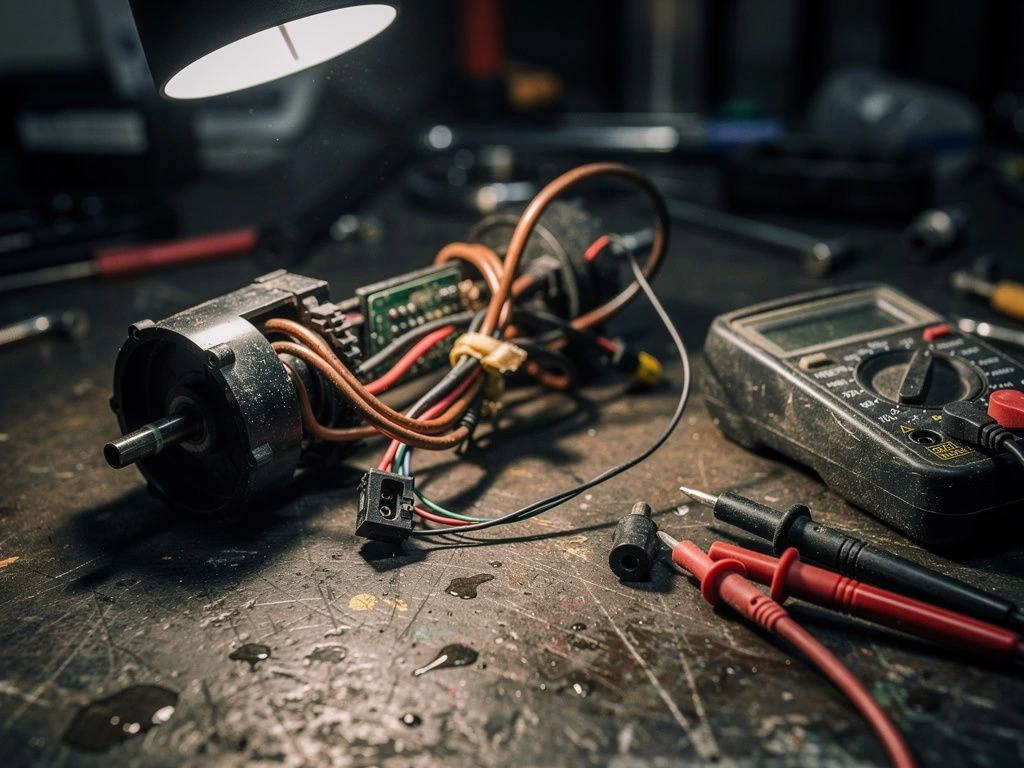
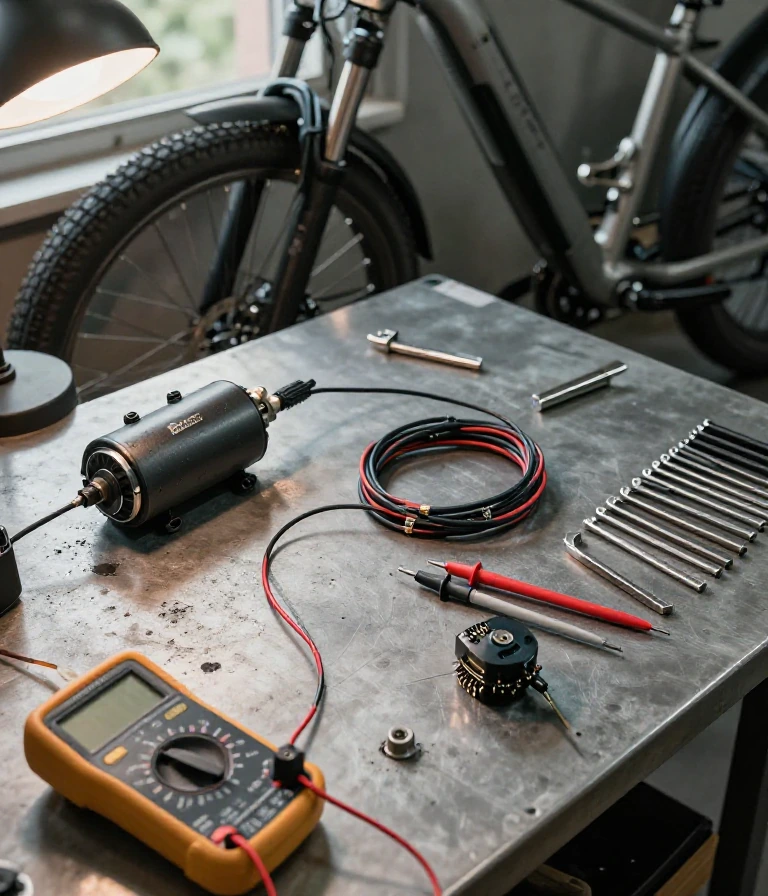
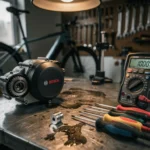
Bafang pedal assist not working indicates a failure in the signal chain between your sensors and the motor controller. Check your PAS sensor and EB-BUS harness
Bafang pedal assist not working indicates a failure in the signal chain between your sensors and the motor controller. Check your PAS sensor and EB-BUS harness connections first.
⚠️ SAFETY WARNINGS
Remove battery before any work
Wait 5+ minutes for capacitor discharge
NEVER bridge positive and negative terminals
Use insulated tools only
Do not test ride if you smell burning or feel excessive heat
In the context of Bafang systems, specifically on models like the BBS02 and BBSHD, a communication failure often triggers a system lockout. Bafang defines error code 30 as “communication failed” between display and controller. While the term “Error 30” specifically refers to the EB-BUS protocol disruption, the symptom of “pedal assist not working” is often the practical result of this digital breakdown.
If your throttle works but pedaling does nothing, the controller is receiving power but is not receiving the specific 5V logic reference or the digital signal from the Pedal Assist Sensor (PAS).
Symptom
Root Cause
Severity
Estimated Repair Time
Throttle works, PAS fails
Broken PAS sensor wire
Moderate
30-60 minutes
No motor assist at all
EB-BUS communication loss
High
15-30 minutes
Display shows Error 30
Display-Controller disconnect
High
10-20 minutes
Motor cuts out on bumps
Vibration damage/loose Julet
Low
5-10 minutes
What causes Bafang pedal assist not working?
Several technical failures can interrupt the signal required for pedal assist. The EB-BUS main harness carries 5V logic between the display and the controller; any interruption here prevents the “request” for assist from being processed. Most common culprits include:
Moisture Ingress: Water entering Julet or Higo connectors causes pin corrosion and short circuits.
Connector Corrosion: Coastal salt air or high humidity can degrade the small pins inside JST-SM connectors.
Vibration Damage: Loose mounting of the PAS sensor or cracked solder joints in the controller can cause intermittent failure during rides.
Pressure Washing Damage: High-pressure water forced into seals can bypass the waterproof housing, damaging the Hall sensor or the controller’s MOSFET.
Wiring Fatigue: The EB-BUS harness often experiences tension at the steering axis, leading to internal wire breakage.
Quick Fix: Error 30 in 5 steps
If you are stranded, follow these rapid steps to attempt a system reset:
Disconnect the battery from the drive unit.
Wait 5 minutes to allow the internal capacitors to discharge fully.
Inspect the EB: BUS main harness for visible kinks or tears.
Reseat all Julet and Higo connectors until you hear a distinct click.
If the unit was recently in rain, dry the pins and reconnect.
How to fix Error 30 step by step
When the quick fix fails, you must move to a formal diagnostic workflow. You will need a digital multimeter, electronic contact cleaner, and dielectric grease.
Step 1: Test the PAS Sensor Signal
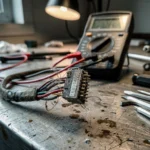
The PAS sensor uses Hall sensor logic to detect magnet rotation. Using a multimeter, check for continuity in the sensor wire. If the sensor is faulty, the controller will never “see” the pedaling motion, even if the display is on.
Step 2: Verify the 5V Logic Reference
Testing the 5V reference voltage at the display-controller communication port confirms if the controller is responsive. Use your multimeter to check the voltage between the signal and ground pins on the EB-BUS harness. If this voltage is missing, the controller’s internal logic stage or the communication protocol is compromised.
Step 3: Inspect Connector Integrity
Check for pin corrosion inside the Julet or Higo connectors. If you see green or white residue, use contact cleaner to remove it. Apply a thin layer of dielectric grease to prevent future oxidation, especially in humid climates.
If the error persists after these steps or you notice signs of electrical damage (burning smell, abnormal heat), recommend authorized service center.
Prevention & Maintenance
To ensure your Bafang system remains reliable, focus on environmental protection. Avoid pressure washing near the motor or display; use a damp cloth instead. Ensure all Julet connectors are fully seated and the locking tabs are engaged. In coastal areas or regions with heavy freeze-thaw cycles, check the torque specs on your sensor mounts every 3 months to prevent vibration-induced signal loss. Use high-quality waterproof seals for any aftermarket wiring additions.
Frequently Asked Questions
Is it dangerous to ride with an error code?
Summary: Yes, it can be unpredictable.
An error like Error 30 means the communication link is unstable. This can cause the motor to suddenly engage or cut out, which is dangerous during high-speed commutes or technical climbs.
When should I replace my PAS sensor instead of fixing wires?
Summary: Replace if the sensor housing is cracked or internal.
If you have verified 5V at the connector but the signal doesn’t change when you spin the magnets, the Hall sensor inside the unit is likely dead. Replacement is more efficient than attempting to repair the internal sensor.
Can I use a different display to fix the error?
Summary: Only if the protocol matches.
Bafang systems use specific display-controller communication protocols. You cannot simply swap a generic display onto a Bafang BBS02 system; it must be a compatible Bafang-protocol unit.
How do I prevent moisture ingress in the future?
Summary: Use dielectric grease and check seals.
Apply dielectric grease to all connector pins. This creates a barrier against moisture and salt, which is vital for riders in humid or coastal climates.
Check the tension of your PAS sensor mounting bolts before your next long-distance ride.
This guide is based on real-world experience with Bafang motors. If the error persists or you notice burning smell or abnormal heat, consult an authorized service center.
Frequently Asked Questions
Is Bafang error code 07 dangerous for my motor?
Summary: Error 07 indicates a motor phase line failure or communication issue.
Error 07 indicates a motor phase line failure or communication issue. It is not immediately destructive, but it can cause the motor to stutter or fail to engage during high-torque pedaling.
This error often stems from loose connections within the motor phase wires or a malfunctioning controller. If you notice the motor “cogging” or feeling heavy during assistance, inspect the wiring harness for insulation breaches or loose pins before the controller attempts to drive the motor under load.
When should I replace a Bafang controller versus repairing it?
Summary: Replace the controller if you detect burnt electrical smells or visible heat damage on the casing.
Replace the controller if you detect burnt electrical smells or visible heat damage on the casing. Repair the wiring harness or external sensors if the issue is localized to a single connection point.
A fried controller usually requires a full unit replacement, such as the MAX-C966 series, to ensure electrical integrity. However, if the throttle works but pedal assist fails, the issue is frequently a failed cadence sensor rather than the internal logic of the controller itself.
Can I fix Bafang pedal assist issues at home without tools?
Summary: You can perform basic inspections of cable connections and sensor alignment without tools.
You can perform basic inspections of cable connections and sensor alignment without tools. However, deep electrical repairs or programming changes require specialized diagnostic equipment and a multimeter.
Start by checking the external speed-detecting sensor installation to ensure the magnet is properly aligned with the sensor. If the connection is physically intact but the system remains unresponsive, you will likely need a technician to access the EB-BUS or internal controller settings.
How do I prevent pedal assist failure from happening again?
Summary: Prevent failures by ensuring all system cabling is properly seated and protected from moisture.
Prevent failures by ensuring all system cabling is properly seated and protected from moisture. Use weather-resistant cable management to prevent vibration-induced loosening of the EB-BUS connections.
Urban riders in high-vibration environments, like those commuting in NYC or San Francisco, should periodically check the tension of the battery slideway installation. Maintaining a secure battery connection prevents voltage drops that can trigger false error codes or sudden loss of pedal assist power.
Why does pedal assist fail after riding through heavy rain?
Summary: Moisture ingress often causes short circuits in the external speed-detecting sensor or the cadence sensor.
Moisture ingress often causes short circuits in the external speed-detecting sensor or the cadence sensor. This creates signal noise that prevents the controller from recognizing your pedaling motion.
Water can penetrate the seals of the display (DP-C01.RS232.7) or the drive unit. If the motor works under throttle but ignores pedaling after a storm, the sensor’s signal is likely being grounded or interrupted by residual moisture within the wiring harness.
I am a specialist in technical diagnostics and advanced electric bicycle repair. I founded Fix E-Bike Code with a clear mission: to demystify the electronic faults and complex error codes that impact modern electric mobility. My approach combines engineering theory with hands-on workshop experience, allowing me to deliver precise and safe solutions for every system.
Throughout my career, I have specialized in Battery Management Systems (BMS), firmware optimization, and controller diagnostics for the market’s leading manufacturers. I understand that an e-bike is not just a mode of transport, but a piece of technology that requires precision. Therefore, I document each of my procedures with the goal of raising technical standards within the community of enthusiasts and mechanics.