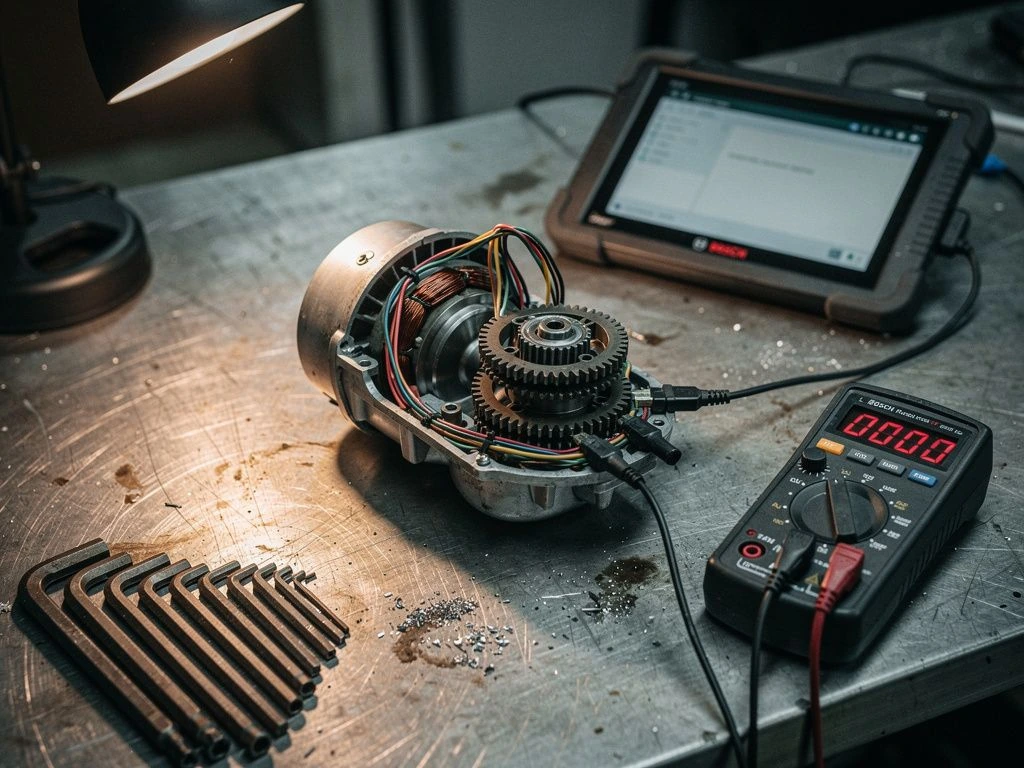
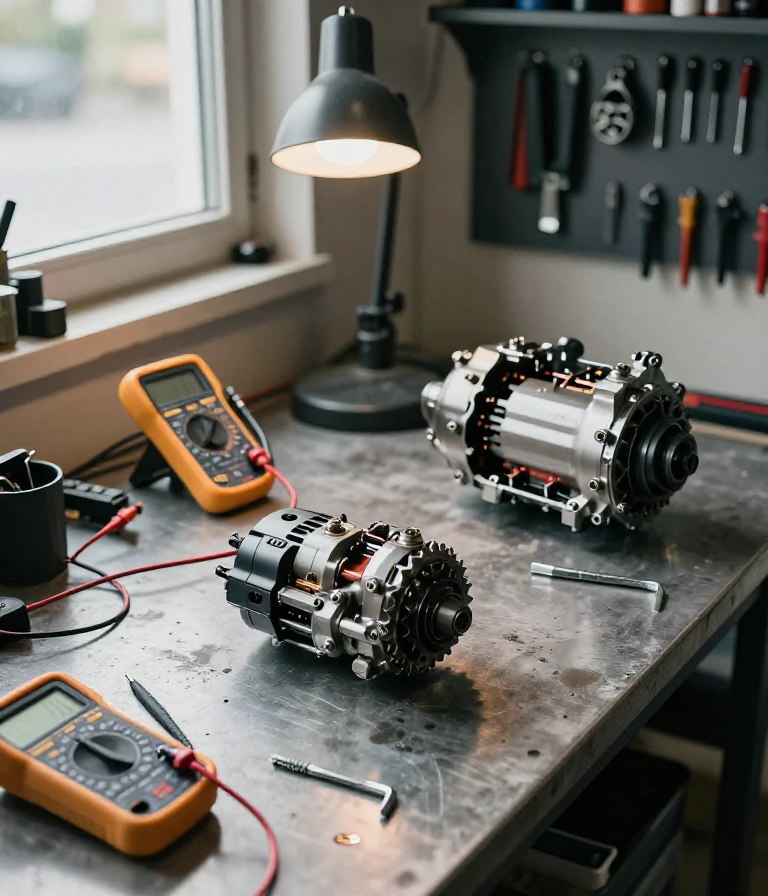
Error 500 is a critical system alert signifying an “Internal error in the drive unit.” Unlike communication errors that affect the display-controller link, this error specifically targets the internal logic or mechanical state of the Bosch Drive Unit (Active Line or Performance Line). When this code triggers, the motor controller detects a discrepancy in internal sensor data or a failure in the power stage electronics.
Symptom
Root Cause
Severity
Estimated Repair Time
Motor cuts out mid-pedal
Internal Controller Logic Fault
Critical
2-4 Hours (Dealer Only)
Error appears after bumps
Internal Connection/Vibration
High
30-60 Minutes
System works after reboot
Temporary Software Glitch
Moderate
5 Minutes
Complete motor silence
MOSFET or Hall Sensor Failure
Critical
1-2 Days (Replacement)
What causes Error 500 on Bosch motors?
The root cause of Error 500 is often internal to the sealed drive unit, making it more complex than a simple loose wire. However, several environmental and electrical factors can trigger this internal fault. The drive unit manages complex 48V-54.6V peak power distributions through high-performance MOSFETs and relies on precise Hall sensor data to manage motor position.
Common triggers include:
Moisture Ingress: High humidity or improper sealing can allow water to bypass gaskets, causing short circuits in the internal EB-BUS communication.
Vibration Damage: Heavy impacts from urban potholes or trail riding can loosen internal solder joints or delicate sensor connections.
Pressure Washing Damage: High-pressure water forced into seals can bypass the main harness protection, leading to pin corrosion.
Climate-Specific Failures: In coastal areas, salt air can accelerate corrosion on external contact points, while freeze-thaw cycles in northern climates can expand moisture inside the unit.
Thermal Stress: Excessive heat during long climbs can cause internal components to exceed safe operating temperatures, triggering a protective shutdown.
Quick Fix: Error 500 in 5 steps
Before attempting deep diagnostics, follow this rapid reset procedure to clear temporary logic errors.
Power Down: Turn off your display and remove the battery from the frame.
Discharge: Wait at least 5 minutes to allow the internal capacitors to fully discharge.
Inspect Connections: Ensure the battery is seated correctly and the main power connector is fully engaged.
System Reboot: Reinsert the battery and power on the display to see if the error clears.
Check Load: If the error returns only under load, it is likely a hardware failure rather than a software glitch.
If the quick fix fails, you must perform a more technical diagnostic. Note that Bosch systems are highly proprietary; many “fixes” require a Bosch-specific diagnostic tool. However, riders can rule out external factors.
Step 1: Verify Battery Voltage and Connection
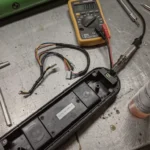
Using a multimeter, check the battery terminals for stable voltage. Ensure you are seeing the nominal voltage (e.g., 36V or 48V depending on your specific Bosch system) and that there is no significant drop when the motor attempts to engage.
Step 2: Inspect External Wiring Harnesses
Check the wiring between the battery, the display, and the drive unit. Look for any signs of “pin corrosion” or “moisture ingress” at the Julet or Higo-style connectors. Ensure the harness is not pinched by the frame.
Step 3: Test for Communication Integrity
If your display stays on but the motor won’t assist, the issue might be the display-controller communication protocol. Check if the display can still communicate with the system via the EB-BUS main harness. If the display shows “No Connection,” the issue is external; if it shows “Error 500,” the issue is internal to the motor.
Step 4: Clean and Reseal
If moisture is suspected, use a dedicated electronic contact cleaner to clean any visible terminals. Apply a small amount of dielectric grease to prevent future corrosion, but do not over-apply.
Diagnostic Tool Reference Table
Tool
Purpose
Target Value/Action
Multimeter
Voltage Check
Confirm stable battery output
Contact Cleaner
Corrosion Removal
Clean pins in moisture-exposed areas
Dielectric Grease
Moisture Protection
Apply to external connector seals
Bosch Diagnostic Tool
Software/Logic
Required for internal unit reset
Prevention & Maintenance
To prevent Error 500 from recurring, focus on protecting the drive unit from environmental stressors. Avoid using high-pressure washers near the motor or battery terminals, as this is the leading cause of moisture ingress. In humid or coastal climates, regularly inspecting the battery contact points for salt-induced corrosion is essential. Always ensure your battery mounting bolts are torqued to the manufacturer’s specific values to prevent vibration-induced damage to the internal EB-BUS harness.
Frequently Asked Questions
Is Error 500 dangerous to ride?
Summary: Yes, it can be unpredictable.
If the error is caused by a failing MOSFET or internal short, the motor may suddenly cut power or behave erratically, which can be dangerous during high-speed commuting.
When should I replace the motor instead of fixing it?
Summary: When the error persists after a full system reboot.
Because Error 500 is an “Internal Drive Unit Fault,” it often indicates a hardware failure that cannot be fixed with external wiring. If the error is persistent, the drive unit usually requires professional replacement.
Can I bypass the error with software?
Summary: No, not for riders.
While some aftermarket controllers allow for error clearing, Bosch systems are locked. You must use official Bosch diagnostic software to interface with the drive unit’s logic.
How do I stop moisture from causing this?
Summary: Use proper sealing and cleaning techniques.
Keep your connections clean, use dielectric grease on external plugs, and never direct high-pressure water at the motor or battery interface.
Always check that your battery is fully seated and the connection is clean before assuming the motor has failed.
This guide is based on real-world experience with Bosch motors. If the error persists or you notice burning smell or abnormal heat, consult an authorized service center.
Frequently Asked Questions
Is Bosch error code 500 dangerous for my motor?
Summary: Error code 500 indicates an internal drive unit fault.
Error code 500 indicates an internal drive unit fault. While it usually causes immediate power loss rather than mechanical failure, riding with a compromised motor can lead to overheating or permanent electrical damage.
This error signifies a logic or hardware failure within the Bosch Drive Unit. If you notice a “cogged” feeling or smell ozone during a ride, stop immediately to prevent a thermal event or short circuit within the motor casing.
When should I replace the Bosch drive unit versus repairing it?
Summary: You should replace the drive unit if the error persists after a system restart.
You should replace the drive unit if the error persists after a system restart. Internal electronic faults often require full component replacement rather than component-level soldering or part swapping.
Because error 500 is an internal system failure, professional technicians use Bosch diagnostic tools to confirm if the fault is in the controller or the motor sensors. If the error is not transient, the unit typically requires replacement under warranty or service.
Can I fix Bosch error code 500 at home without tools?
Summary: You can attempt a system restart by turning the display off and removing the battery.
You can attempt a system restart by turning the display off and removing the battery. However, a true error 500 usually requires professional diagnostic tools and cannot be fixed with standard household tools.
The official manual instructs riders to “Restart the system” first. If the error remains, the issue is likely a deep-seated electronic failure within the Active Line or Performance Line hardware that requires a certified Bosch eBike dealer for resolution.
How do I prevent Bosch error 500 from happening again?
Summary: Preventing this error involves protecting your system from extreme moisture and heavy vibrations.
Preventing this error involves protecting your system from extreme moisture and heavy vibrations. Ensure all battery connections are seated perfectly and the motor housing is free from debris.
High-stress urban riding in cities like Seattle or New York often exposes bikes to heavy rain and road vibration. Maintaining electrical integrity by keeping connections clean and avoiding high-impact curb jumps helps prevent internal sensor or controller malfunctions.
Why does Bosch error 500 appear after a heavy climb?
Summary: The error may trigger due to thermal stress or high current draw during intense pedaling.
The error may trigger due to thermal stress or high current draw during intense pedaling. High loads can cause internal electronic components to reach their operational limits, triggering a safety shutdown.
During steep climbs, the drive unit handles peak amperage. If a component within the internal drive unit is marginal, the heat generated during sustained high-torque output can cause the system to report an internal fault to protect the circuitry.
I am a specialist in technical diagnostics and advanced electric bicycle repair. I founded Fix E-Bike Code with a clear mission: to demystify the electronic faults and complex error codes that impact modern electric mobility. My approach combines engineering theory with hands-on workshop experience, allowing me to deliver precise and safe solutions for every system.
Throughout my career, I have specialized in Battery Management Systems (BMS), firmware optimization, and controller diagnostics for the market’s leading manufacturers. I understand that an e-bike is not just a mode of transport, but a piece of technology that requires precision. Therefore, I document each of my procedures with the goal of raising technical standards within the community of enthusiasts and mechanics.