Segway Ninebot Max G30 Error 18: Motor Hall Sensor Fix Guide
Ninebot Max G30 Error 18 indicates a motor Hall sensor abnormality. Check the motor wiring and controller connections immediately to restore propulsion.
Ninebot Max G30 Error 18 indicates a motor Hall sensor abnormality. Check the motor wiring and controller connections immediately to restore propulsion.
⚠️ SAFETY WARNINGS
Remove battery before any work
Wait 5+ minutes for capacitor discharge
NEVER bridge positive and negative terminals
Use insulated tools only
Do not test ride if you smell burning or feel excessive heat
Error 18 is a critical diagnostic flag indicating that the controller is receiving incorrect or no data from the motor’s Hall sensors. In the Segway-Ninebot ecosystem, this error typically triggers a “locked” state where the rear wheel may feel heavy or completely unresponsive during acceleration. The controller cannot determine the precise position of the motor magnets, making synchronized phase commutation impossible.
Symptom
Root Cause
Severity
Estimated Repair Time
Wheel locks up/No power
Hall Sensor failure
High
60-90 minutes
Beeping/Red wrench icon
Broken motor phase wire
High
45-60 minutes
Intermittent power loss
Loose Julet/Higo connector
Medium
15-20 minutes
Error after rain/wash
Moisture ingress in wiring
Medium
30-45 minutes
What causes Error 18 on Ninebot motors?
The root of this error lies in the communication between the brushless DC (BLDC) motor and the internal controller. The Hall sensors inside the motor hub detect the magnetic field and provide a 5V logic reference to tell the controller when to fire the MOSFETs. If this signal is interrupted, the system enters a failsafe mode.
Common technical triggers include:
Moisture Ingress: High humidity or pressure washing damage can penetrate the motor’s internal seals, causing short circuits in the Hall sensor wires.
Vibration Damage: Constant road vibration from urban commuting can loosen the internal motor phase wires or the connection to the main EB-BUS harness.
Connector Corrosion: Salt air in coastal regions can corrode the pins of the Julet or Higo connectors, breaking the 5V signal path.
Thermal Stress: Excessive heat from heavy loads can damage the Hall sensor’s semiconductor properties or the controller’s sensing logic.
Quick Fix: Error 18 in 4 steps
Before performing a deep teardown, attempt these rapid recovery steps to rule out simple connection issues.
Disconnect battery: Remove the power source to allow the controller to reset.
Wait for discharge: Wait at least 5 minutes to ensure all internal capacitors have fully discharged.
Reseat connectors: Locate the motor phase cable connection and press the connector until you hear a distinct click.
Check for moisture: If the error appeared after rain, use compressed air to dry the connector area.
If the quick fix fails, you must perform a full electrical diagnostic. This requires a multimeter, contact cleaner, and dielectric grease.
Step 1: Inspect the motor phase harness
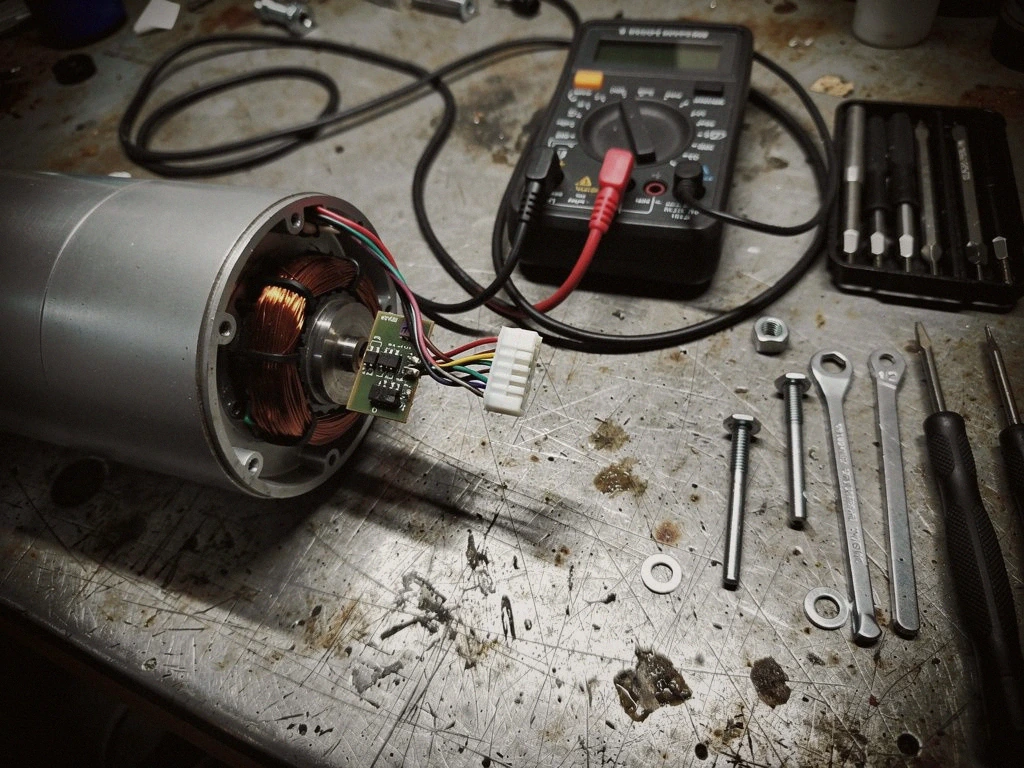
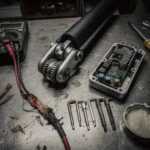
Trace the wire exiting the rear motor axle. Look for signs of “melted wires” or pinched insulation. In many Ninebot Max G30 cases, the wires near the folding mechanism or axle can suffer fatigue from constant vibration.
Step 2: Test Hall sensor voltage
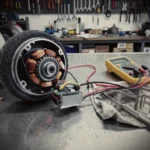
Using a multimeter, measure the voltage on the small signal wires (typically 5V logic). If you see fluctuating voltages or 0V, the Hall sensor or its wiring is the culprit. On specific models like the G30, this is almost always a physical wire break inside the motor housing or at the connector junction.
Step 3: Clean and reseal connectors
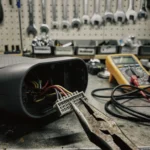
Apply electronic contact cleaner to the Julet or Higo connectors. Use a small brush to remove any oxidation. Once dry, apply a thin layer of dielectric grease to protect against future moisture ingress.
Step 4: Verify Controller integrity
If the wiring and Hall sensors test fine, the issue may lie within the controller’s MOSFET or sensing circuit. If the motor wires show continuity but the error persists, the controller itself may require replacement.
Prevention & Maintenance
To avoid recurrence, avoid using high-pressure washers on the scooter; a damp cloth is sufficient for cleaning. Ensure all external connectors are seated firmly and use weather-resistant silicone grease to seal the junctions. For riders in humid or coastal climates, inspecting the wiring for pin corrosion every three months is highly recommended to prevent salt-air degradation.
Frequently Asked Questions
Is an Error 18 dangerous to ride?
Summary: Yes, it can cause sudden loss of power or wheel locking.
Do not attempt to ride with a flashing Error 18, as the motor may behave unpredictably or lock up mid-transit, causing a fall.
When should I replace the motor instead of fixing the wire?
Summary: Replace the motor if the Hall sensors inside the hub are physically damaged.
If your multimeter shows no signal continuity through the internal motor windings even after reseating the external harness, the internal sensor failure requires a motor replacement.
Can I use Wago connectors to fix melted wires?
Summary: Yes, Wago 221 connectors are a popular DIY alternative for melted phase wires.
However, ensure the connection is housed in a waterproof enclosure to prevent moisture ingress from causing a new error.
How do I prevent this in rainy weather?
Summary: Use dielectric grease on all exposed connectors.
Applying a specialized electrical grease creates a barrier against the freeze-thaw cycles and heavy rain common in many urban commuting environments.
Check the tightness of your rear axle bolts to ensure motor vibrations do not loosen the internal wiring harness.
This guide is based on real-world experience with Ninebot motors. If the error persists or you notice burning smell or abnormal heat, consult an authorized service center.
Is Ninebot Max G30 error 18 dangerous for my motor?
Summary: Error 18 indicates a motor hall sensor abnormality.
Error 18 indicates a motor hall sensor abnormality. While not immediately explosive, it can cause the motor to lock up or overheat if the controller attempts to force rotation through a faulty signal.
This code signifies that the controller is receiving incorrect or no feedback from the Hall effect sensors inside the hub motor. If you notice the motor feels “cogged” or heavy during a push, stop riding immediately to prevent thermal damage to the internal copper windings.
When should I replace the motor vs repair the sensor?
Summary: Replace the entire hub motor if the internal Hall sensor wiring is melted or severed.
Replace the entire hub motor if the internal Hall sensor wiring is melted or severed. Repair the wiring or controller connections if the sensor itself is still sending consistent voltage signals.
Diagnostic testing requires checking the five-wire Hall sensor harness for continuity. If you find melted wires near the phase connectors (a common issue in high-torque urban riding), a harness repair may suffice. However, if the sensor chip is fried, a full motor replacement is the OEM-standard fix.
Can I fix Ninebot error 18 at home without tools?
Summary: You cannot perform a functional repair without multimeters and soldering tools.
You cannot perform a functional repair without multimeters and soldering tools. A basic visual inspection of the motor cables can identify obvious damage, but electrical faults require technical intervention.
If you see visible charring on the motor phase wires, you will need to strip and reconnect them using high-quality connectors like Wago 221s or crimped terminals. Without a multimeter to verify the 5V Hall signal, you risk shorting the controller and causing permanent damage.
How do I prevent error 18 from happening again?
Summary: Prevent error 18 by avoiding deep water submersion and extreme heat.
Prevent error 18 by avoiding deep water submersion and extreme heat. Ensure all motor cable entry points are sealed to prevent moisture from corroding the sensitive Hall sensor wires.
Corrosion is the primary driver of signal failure in coastal US cities like San Francisco or Miami. Keeping the motor’s cable sheath intact and avoiding riding through heavy puddles protects the low-voltage communication lines from the high-voltage power phase interference.
Why does error 18 appear after riding in heavy rain?
Summary: Moisture ingress into the motor hub assembly causes short circuits in the Hall sensor lines.
Moisture ingress into the motor hub assembly causes short circuits in the Hall sensor lines. Water creates a conductive path that disrupts the precise magnetic signal required for motor commutation.
When water penetrates the motor casing, it bridges the signal wires, causing the controller to see an “abnormal” state. If this occurs after a ride, dry the motor area thoroughly and check for any “ozone” smells or visible moisture leaking from the axle nut area.
I am a specialist in technical diagnostics and advanced electric bicycle repair. I founded Fix E-Bike Code with a clear mission: to demystify the electronic faults and complex error codes that impact modern electric mobility. My approach combines engineering theory with hands-on workshop experience, allowing me to deliver precise and safe solutions for every system.
Throughout my career, I have specialized in Battery Management Systems (BMS), firmware optimization, and controller diagnostics for the market’s leading manufacturers. I understand that an e-bike is not just a mode of transport, but a piece of technology that requires precision. Therefore, I document each of my procedures with the goal of raising technical standards within the community of enthusiasts and mechanics.